Introduction
Have you ever wondered how huge drilling machines turn so smoothly? The answer often comes down to one part. That part is called a Spezialbohrgetriebe. It is a special gear unit made just for drilling. This word is German, and it means “special drilling gearbox.” These gear units help machines drill through tough ground. They are used in construction, mining, and even geothermal projects. In this article, we will explain everything about Spezialbohrgetriebe in plain, simple words. You do not need to be an engineer to understand this guide. We will cover how it works, why it matters, and how to choose the best one. By the end, you will know why a Spezialbohrgetriebe is so important for heavy drilling work. Let’s dive in and explore this fascinating piece of machinery together.
What Is a Spezialbohrgetriebe?
A Spezialbohrgetriebe is a gear unit built for drilling machines. It takes power from a motor and turns it into strong, steady rotation. This rotation drives a drill shaft or auger into the ground. Unlike normal gearboxes, a Spezialbohrgetriebe is made for extreme conditions. It handles heavy loads, dust, vibration, and shocks. Think of it like the engine of a car, but for drilling power instead of driving speed. Without a good Spezialbohrgetriebe, a drill rig would stall or break down fast. Engineers design these gear units to be tough and reliable. They must work for many hours without failing. That is why a Spezialbohrgetriebe is often called the heart of a drilling rig. It quietly does the hard work while the operator focuses on steering the machine.
How Does a Spezialbohrgetriebe Work?
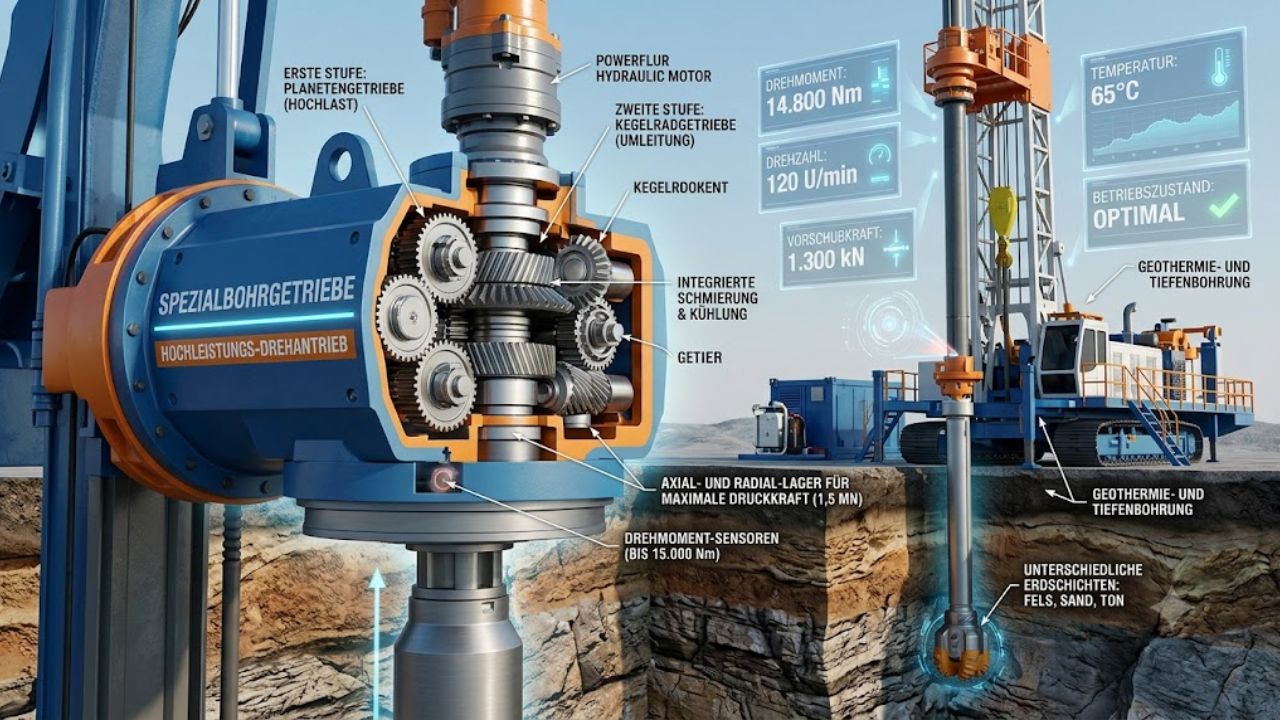
The working idea behind a Spezialbohrgetriebe is simple to picture. A motor spins fast but with low force. The Spezialbohrgetriebe slows this spin down. In return, it multiplies the force, called torque. This trade-off is what lets a drill push through rock and soil. Inside the gear unit, sets of gears mesh together in stages. Each stage reduces speed a little more and boosts power a little more. Some Spezialbohrgetriebe models use planetary gears for a compact design. Others use bevel gears to change the direction of power. The final output shaft connects to the drill string. This is where all that gathered power gets used. Good lubrication keeps the gears cool and smooth. Seals keep dirt and water out of the gear housing. Together, these parts make drilling both powerful and controlled.
Why Drilling Rigs Need Special Gear Units
You might ask why a normal gearbox will not do the job. Drilling is not like everyday machine work. The ground fights back with rocks, clay, and hidden debris. A regular gearbox would wear out quickly under this stress. A Spezialbohrgetriebe is built with extra strength for exactly this reason. It resists shock loads when the drill hits something hard. It also handles side forces, not just straight-line power. Drilling rigs often stop and start suddenly, which stresses gears badly. A Spezialbohrgetriebe is designed to survive these sudden changes. It also keeps working in extreme heat, cold, or wet weather. Construction sites are rarely gentle places for machines. This is why manufacturers use thicker steel and hardened gear teeth. The result is a gear unit that lasts for years, even under daily heavy use on demanding job sites.
Key Components of a Spezialbohrgetriebe
Every Spezialbohrgetriebe has a few main parts working together. First, there is the housing, which protects everything inside. It is usually made of strong cast iron or steel. Next come the gears themselves, arranged in careful stages. These gears are hardened to resist wear and cracking. Bearings support the shafts and let them spin smoothly. Seals stop dirt, dust, and water from getting inside. A lubrication system, often oil-based, keeps friction low. Some models also include a cooling system for long jobs. Sensors may be added to track temperature or vibration. This helps operators catch problems early. Each component plays a small but vital role. If even one part fails, the whole Spezialbohrgetriebe can stop working. That is why quality control matters so much during manufacturing. Every gear tooth and bearing must meet strict standards before use.
Types of Spezialbohrgetriebe Available Today
Not every drilling job is the same, so gear units differ too. Some Spezialbohrgetriebe models are built for rotary drilling rigs. These handle deep foundation work and large-diameter holes. Other types are made for smaller auger drills used in landscaping or utility work. There are also planetary Spezialbohrgetriebe units, known for being compact yet powerful. Right-angle versions change the direction of power for tight spaces. Some manufacturers offer modular designs that can be customized. This lets buyers pick gear ratios that match their exact needs. Heavy-duty offshore drilling often uses sealed, corrosion-resistant models. These survive salty air and constant moisture. Geothermal drilling projects may need units built for continuous, long-duration use. Choosing the right type depends on torque needs, drill depth, and ground conditions. A supplier can help match the correct Spezialbohrgetriebe to your specific project.
Materials Used in Spezialbohrgetriebe Manufacturing
The materials inside a Spezialbohrgetriebe decide how long it will last. Most gears are made from alloy steel, known for strength. This steel is then heat-treated to harden the surface. Hardening makes gear teeth resist wear from constant grinding contact. Housings are often cast iron because it dampens vibration well. Some newer designs use lightweight but strong aluminum alloys instead. Seals are usually rubber or synthetic compounds that resist heat and oil. Bearings are made from hardened steel too, built to handle heavy radial loads. Manufacturers test these materials under extreme pressure before approval. They simulate years of wear in just a few weeks of lab testing. This careful material choice is not optional; it is essential. A Spezialbohrgetriebe built with poor materials will fail fast in the field. Good materials mean fewer breakdowns and lower repair costs over time.
Benefits of Using a High-Quality Spezialbohrgetriebe
Choosing a well-made Spezialbohrgetriebe brings real, practical benefits. First, it reduces downtime because it breaks down less often. Less downtime means projects finish on schedule and within budget. Second, it improves safety, since sudden gear failure can be dangerous. A reliable Spezialbohrgetriebe protects both workers and equipment. Third, it saves money over the long run, even if the upfront cost is higher. Cheap gear units often need frequent repairs, which adds up fast. Fourth, a quality Spezialbohrgetriebe runs quieter and with less vibration. This makes the job site more comfortable for operators. Fifth, it handles a wider range of ground conditions without struggling. From soft soil to hard rock, a strong gear unit adapts well. In short, investing in a good Spezialbohrgetriebe pays off through reliability, safety, and long-term savings.
Common Applications for Spezialbohrgetriebe
Spezialbohrgetriebe units show up in many industries, not just construction. Foundation drilling for skyscrapers relies heavily on these gear units. Bridge piling projects also need strong, dependable drilling power. Mining companies use them for exploration and blasting hole drilling. Water well drilling teams depend on smaller Spezialbohrgetriebe models daily. Geothermal energy projects use them to drill deep heat-exchange wells. Even wind turbine foundations require solid drilling gear units for anchoring. Oil and gas exploration also uses specialized versions built for extreme depth. Utility companies use compact models for pole and pipeline installation work. Because ground conditions vary so much, each application needs a tailored gear unit. This wide range of uses shows just how essential Spezialbohrgetriebe technology really is. Wherever the ground needs to be pierced with precision and power, a suitable gear unit is doing the heavy lifting behind the scenes.
How to Choose the Right Spezialbohrgetriebe
Picking the right Spezialbohrgetriebe can feel overwhelming at first. Start by figuring out your required torque output. This depends on drill diameter and the type of ground you face. Next, consider the rig’s mounting space and weight limits. A gear unit that is too large simply will not fit. Look at the duty cycle too, meaning how long it runs each day. Continuous heavy use needs a more robust Spezialbohrgetriebe than occasional light work. Check the sealing rating if you work in wet or dusty environments. A poor seal will let contaminants ruin the gears quickly. Always ask suppliers for real performance data, not just marketing claims. Reliable manufacturers will happily share test results and case studies. Finally, think about after-sales support and spare parts availability. A great Spezialbohrgetriebe is useless if you cannot get it serviced when needed.
Maintenance Tips for Your Spezialbohrgetriebe
Good maintenance keeps a Spezialbohrgetriebe running for many years. Start with regular oil checks, since lubrication is critical. Old or dirty oil causes extra friction and heat buildup. Change the oil at the intervals your manufacturer recommends. Inspect seals often for cracks or leaks around the housing. A small leak today can become a big failure tomorrow. Listen for unusual noises, like grinding or clicking sounds. These often signal worn gears or damaged bearings inside. Keep the housing clean, especially in dusty job sites. Built-up dirt can trap heat and hide small cracks. Schedule professional inspections at least once or twice a year. Trained technicians can spot problems that operators might miss. Following these simple steps protects your investment. A well-maintained Spezialbohrgetriebe will outlast a neglected one by many years of service.
Common Problems and How to Fix Them
Even the best Spezialbohrgetriebe can develop problems over time. Overheating is one common issue, often caused by low oil levels. Simply refilling or changing the oil usually solves this quickly. Unusual vibration might point to worn or misaligned bearings. In this case, a technician should inspect and replace the parts. Oil leaks are another frequent complaint, usually from worn seals. Replacing seals early prevents bigger, costlier damage later on. Sometimes gears develop pitting, which looks like tiny craters on the teeth. This often comes from contaminated oil or overloading the unit. Regular oil analysis can catch this problem before it worsens. If a Spezialbohrgetriebe suddenly locks up, stop the machine immediately. Continuing to run it can cause serious internal damage. Catching problems early, through routine checks, saves both time and money for everyone involved.
Future Trends in Spezialbohrgetriebe Technology
Technology keeps improving, and Spezialbohrgetriebe design is no exception. Smart sensors are now being built into many new models. These sensors track temperature, vibration, and oil condition in real time. This data helps predict failures before they actually happen. Engineers are also developing lighter materials without losing strength. Lighter gear units mean better fuel efficiency for the whole rig. Some manufacturers are exploring more sustainable manufacturing methods too. This reduces the environmental impact of production. Modular designs are becoming more popular as well. They let companies swap parts instead of replacing entire units. This saves money and reduces waste over time. As drilling projects go deeper and tougher, gear units must keep evolving. The future of Spezialbohrgetriebe technology looks smarter, greener, and more efficient than ever before, benefiting operators and the planet alike.
Conclusion
A Spezialbohrgetriebe may seem like a small part, but it plays a huge role. It powers drilling machines through some of the toughest ground on earth. From foundation work to geothermal wells, this gear unit does heavy lifting every single day. Choosing the right one, and maintaining it well, protects your project and your budget. We hope this guide made the topic of Spezialbohrgetriebe clear and easy to understand. If you are planning a drilling project, take time to research your gear unit options carefully. Talk to trusted suppliers and ask plenty of questions. Have you worked with a Spezialbohrgetriebe before, or are you considering one for an upcoming project? Share your thoughts or questions in the comments below. We would love to hear about your experience and help with any questions you still have.
Frequently Asked Questions (FAQs)
1. What does Spezialbohrgetriebe mean? It is a German term meaning “special drilling gearbox.” It refers to a gear unit built specifically for drilling machines.
2. How long does a Spezialbohrgetriebe usually last? With good maintenance, many units last 10 to 20 years. Lifespan depends on usage, load, and how well it is cared for.
3. Can a Spezialbohrgetriebe be repaired instead of replaced? Yes, in many cases. Worn seals, bearings, or gears can often be replaced without buying a whole new unit.
4. What industries use Spezialbohrgetriebe the most? Construction, mining, geothermal energy, and utility companies rely on them heavily for foundation and drilling work.
5. How do I know if my Spezialbohrgetriebe needs servicing? Watch for unusual noises, leaks, overheating, or vibration. These are early warning signs that servicing is needed soon.
6. Is a bigger Spezialbohrgetriebe always better? Not necessarily. The right size depends on your torque needs and rig space, not just raw size or power.
Read More: JoinCRS com Guide: How It Works for Teachers & Students